Bridge loans are short-term, asset-backed financing instruments that allow commercial real estate investors to close quickly, fund renovations, and bridge the gap to permanent financing — without waiting 60–90 days for a conventional lender. This guide explains exactly how CRE bridge loans work, what they cost in 2026, who qualifies, and how to structure a deal that actually exits cleanly.

What Is a CRE Bridge Loan? (Precise Definition)
A commercial real estate bridge loan is a senior, interest-only debt instrument secured by a commercial property, typically with a term of 6 to 36 months, used to fund a transaction or project that does not yet qualify for — or cannot wait for — permanent financing.
Bridge loans are underwritten primarily on the asset’s current and projected value, the borrower’s exit plan, and the overall deal structure — not on years of cash flow history. This distinction makes them the go-to tool for acquisitions, value-add projects, and transitional assets.
The term “bridge” refers to the financing gap between where a deal stands today and where it needs to be for a long-term loan: stabilized occupancy, completed construction, or a clean property sale. Bridge lenders take on more risk in exchange for higher rates and shorter tenors, while borrowers gain speed and flexibility unavailable through conventional channels.
What CRE Bridge Loans Are Not
Bridge loans are not hard money loans (which typically carry higher rates, shorter terms, and serve distressed-credit borrowers), not construction loans (which fund ground-up development from a blank lot), and not mezzanine debt (which sits behind senior debt and often includes equity participation). Each instrument fills a distinct role in the capital stack.
Bridge Loans vs. Traditional Commercial Mortgages: Key Differences
Understanding where bridge loans differ from conventional CRE loans is essential for choosing the right instrument. The table below compares the two across the dimensions that matter most to investors.
| Factor | Bridge Loan | Conventional CRE Mortgage |
|---|---|---|
| Closing time | 7–21 business days | 60–90+ days |
| Typical term | 6–36 months | 5–30 years |
| Rate range (2026) | 8.0%–12.5% | 6.0%–7.75% |
| LTV | 65%–80% (up to 75% ARV) | 65%–75% |
| Payment structure | Interest-only | P&I amortizing |
| Primary underwriting criteria | Asset value + exit plan | DSCR, occupancy, income history |
| Best for | Transitional, value-add, or time-sensitive assets | Stabilized, income-producing properties |
When Do CRE Investors Need Bridge Financing?
Bridge financing addresses timing mismatches between when capital is needed and when long-term financing becomes available. Four situations account for the vast majority of CRE bridge loan demand.
1. Competitive Acquisitions Requiring Speed
In high-demand commercial real estate markets — including major Texas metros like Dallas-Fort Worth, Houston, and Austin — sellers increasingly favor buyers who can close in under two weeks. Foreclosure sales, off-market transactions, and distressed property auctions routinely impose closing windows of 10–14 days, ruling out conventional lenders entirely. A bridge loan can close in as few as 7 business days from a completed application, turning speed into a competitive advantage in contested bids.
2. Renovation and Value-Add Projects
A commercial property with deferred maintenance, low occupancy, or functional obsolescence typically cannot qualify for a conventional loan until it is stabilized. Bridge financing funds the improvements — through a structured draw schedule tied to construction milestones — and provides the runway to reach the occupancy or income metrics that a permanent lender requires. This approach, called a bridge-to-perm strategy, is one of the most capital-efficient paths to building equity in commercial real estate.
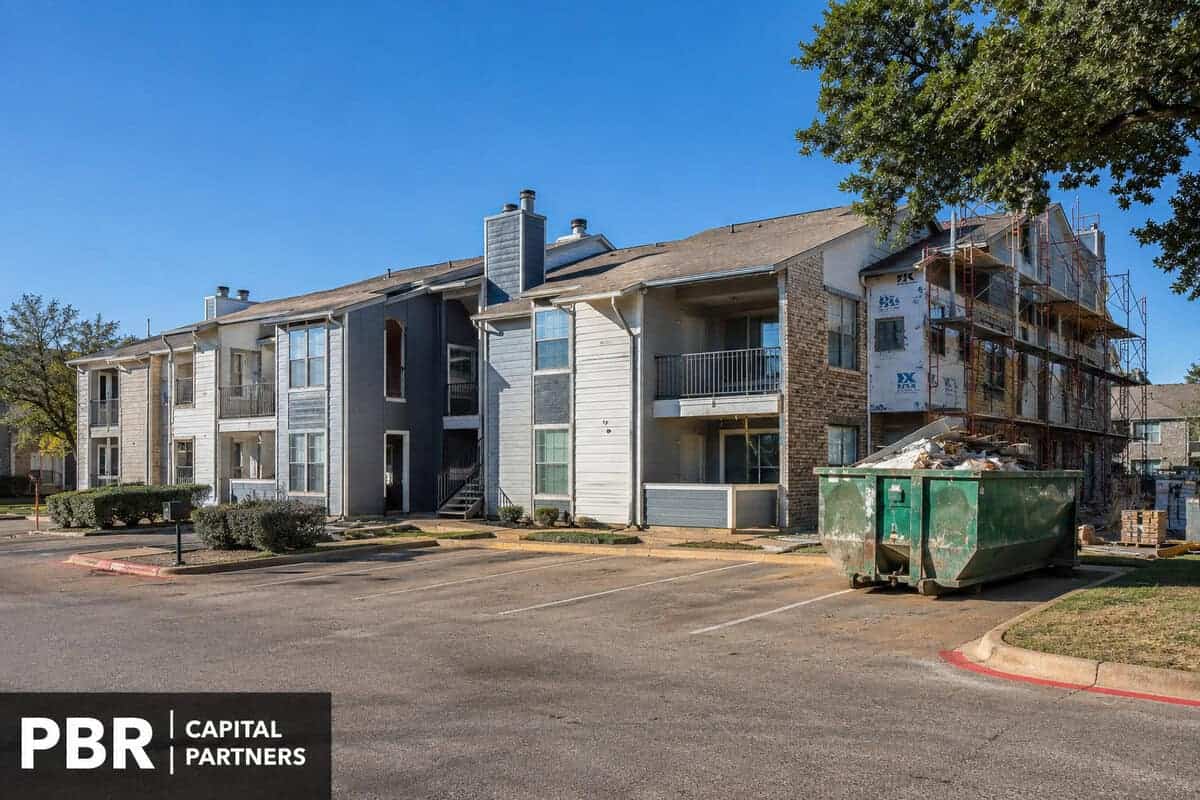
Example: A 48-unit multifamily asset in Fort Worth is acquired at 62% occupancy. A bridge loan funds the $1.2M renovation over 14 months. At 92% occupancy post-renovation, the investor refinances into a 30-year permanent loan at a significantly lower rate, pulling out equity in the process.
3. Portfolio Transitions and 1031 Exchanges
Internal Revenue Code Section 1031 requires replacement property to be identified within 45 days and closed within 180 days of the relinquished property sale. If a deal is moving fast on the replacement side but conventional financing cannot close within that window, bridge financing preserves the exchange timeline. Bridge loans are also used when investors need capital for a new acquisition before an existing property sale closes — effectively using the bridge to avoid a forced sale or a missed opportunity.
4. Construction and Lease-Up Bridge
Ground-up development projects that are near completion but not yet at stabilized occupancy often need a short-term financing instrument to cover the final construction phase and initial lease-up period before transitioning to a permanent loan. Some bridge lenders, including direct capital providers like PBR Capital Partners, will fund this phase when the project and sponsorship team meet their underwriting criteria.
CRE Bridge Loan Costs and Terms in 2026
Bridge loan pricing reflects the speed, flexibility, and risk profile that the product provides. Understanding the total cost of capital — not just the headline rate — is essential before committing to a deal structure.
Interest Rates
As of mid-2026, commercial bridge loan rates from institutional and direct lenders range from 8.0% to 12.5% annually, with the most common deals pricing between 9.0% and 11.0%. Rates are quoted as either fixed or floating (typically SOFR + a spread). For comparison, conventional long-term CRE mortgages are pricing in the 6.0%–7.75% range in the same period. The premium over conventional rates typically runs 200–400 basis points, reflecting the shorter term, faster close, and transitional nature of the asset.
Rate factors: Property type and condition, LTV, borrower experience, loan size, exit strategy credibility, and market location all influence where a bridge loan prices within the range.
Fees and Transaction Costs
- Origination fee: 1.0%–2.5% of the loan amount, paid at closing.
- Extension fee: 0.5%–1.0% of the outstanding balance per extension period (typically 3–6 months).
- Processing, underwriting, and legal fees: $3,000–$8,000 depending on loan complexity.
- Appraisal: $3,500–$7,500 for commercial properties; may be expedited for a premium.
- Prepayment: Most bridge loans have no prepayment penalty after 3–6 months, but confirm in the term sheet.
The all-in cost of a bridge loan — when you factor origination fees, carrying costs, and extension fees — commonly runs 2%–4% above the stated rate over the full loan period. Model this against projected project returns before proceeding.
Loan Terms and Structure
Standard bridge loan terms run 12–18 months for renovation and stabilization projects, with 6-month extensions available. Larger or more complex deals can negotiate 24–36 month initial terms. Loans are structured as interest-only, meaning monthly payments cover only interest charges. Principal is repaid in full at maturity through a refinance or property sale. Most bridge lenders also allow an interest reserve — an amount set aside at closing to fund monthly interest payments — which eliminates out-of-pocket carrying costs during construction or lease-up.
How to Qualify for a Commercial Real Estate Bridge Loan
Bridge loan underwriting is asset-centric rather than borrower-centric, but that does not mean qualification is loose. Lenders focus on four primary factors.
1. Asset Value and Loan-to-Value Ratio
Bridge lenders typically lend up to 70%–80% of current appraised value. For value-add projects, some lenders will lend against the after-repair value (ARV) — the projected value of the property post-renovation — which allows for a higher loan amount relative to the purchase price. An ARV LTV of 70%–75% is typical when renovation budgets are well-supported and the borrower has demonstrated execution experience.
2. Exit Strategy Clarity
The exit strategy is the single most important underwriting factor for a bridge loan. Lenders need to see a credible, specific plan for how the loan will be repaid at maturity. A refinance exit requires knowing what occupancy level, income, and DSCR a permanent lender will require — and building a realistic timeline to get there. A sale exit requires defensible price assumptions and a realistic marketing timeline. Vague or optimistic exit projections are the fastest path to a declined application.
3. Borrower Experience and Creditworthiness
Most bridge lenders look for credit scores in the 620–700 range as a baseline, though credit is weighted less heavily than the deal structure. Sponsorship track record matters: lenders prefer borrowers who have completed similar projects, can demonstrate asset management capability, and have worked through challenges before. First-time CRE investors can qualify, particularly with a strong asset and a clear plan, but may face lower LTVs or additional guarantor requirements.
4. Documentation Required
- Executed purchase agreement or property details (address, use type, current condition)
- Recent appraisal or broker price opinion (BPO)
- Renovation budget and contractor bids (for value-add projects)
- Business plan or project summary with timeline and exit assumptions
- Rent roll and T-12 financials (if income-producing)
- Personal financial statements and two years of tax returns
- Entity documents (operating agreement, articles, EIN)
Bridge lenders move faster on documentation than conventional banks, but having it organized and ready from day one can shave a week or more off the closing timeline.
Building a Credible Exit Strategy
An exit strategy is not a lender formality — it is the financial logic of the entire deal. Investors who treat it as a box to check tend to run into trouble as loan maturity approaches.
Refinance into Permanent Financing (Most Common)
The bridge-to-perm path requires working backward from what a permanent lender will need to see. If your target long-term lender requires a 1.25x DSCR and 90% occupancy, those are the thresholds your renovation and lease-up plan must reach within the bridge term — with enough buffer for unexpected delays. Identify your permanent lender early, understand their underwriting criteria, and build your business plan around those requirements, not optimistic projections.
Property Sale
If your business plan is to improve the asset and sell it, the exit strategy should include a realistic market absorption timeline, a price target supported by comparable sales, and a broker relationship already in place. Lenders will scrutinize sale exits more carefully in soft market conditions, so supporting your price assumptions with current data is important.
Cash-Out Refinance
In situations where the property has appreciated significantly and the current bridge lender will not extend further, a cash-out refinance from a new lender can retire the bridge loan and extract equity simultaneously. This works best when renovation is complete, occupancy is strong, and market conditions support current-value appraisals.
Contingency Planning
Build a contingency into your timeline. Renovation projects routinely run 15%–25% over their original schedules due to permitting delays, subcontractor availability, material lead times, or weather. A 2-month buffer built into your exit timeline is minimal insurance against these realities. Knowing your extension options — and their cost — before you sign the loan documents is non-negotiable.
Bridge Loans for Commercial Real Estate in Texas
Texas has been one of the most active commercial real estate markets in the United States throughout the 2020s, driven by population growth, business relocation activity, no state income tax, and a regulatory environment that supports development. CRE bridge lending plays an especially prominent role in this market.
Why Texas CRE Markets Drive Bridge Loan Demand
The Dallas-Fort Worth (DFW) metroplex — which added more than 170,000 net new residents in 2024 alone — ranks among the top three commercial real estate investment markets nationally by transaction volume. Houston, Austin, and San Antonio have each experienced sustained demand across industrial, multifamily, and mixed-use asset classes. High transaction velocity, competitive bidding on quality assets, and a steady pipeline of value-add and repositioning opportunities create ideal conditions for bridge financing.
As of Q2 2026, the Dallas-Fort Worth CRE market posted over $4 billion in commercial transaction volume, with multifamily, industrial, and office repositioning deals accounting for the largest share of bridge loan activity in the region.
Key bridge loan use cases in Texas commercial real estate include:
- Multifamily value-add acquisitions across DFW, Houston, and San Antonio — especially older workforce housing stock that requires capital improvements before qualifying for agency financing.
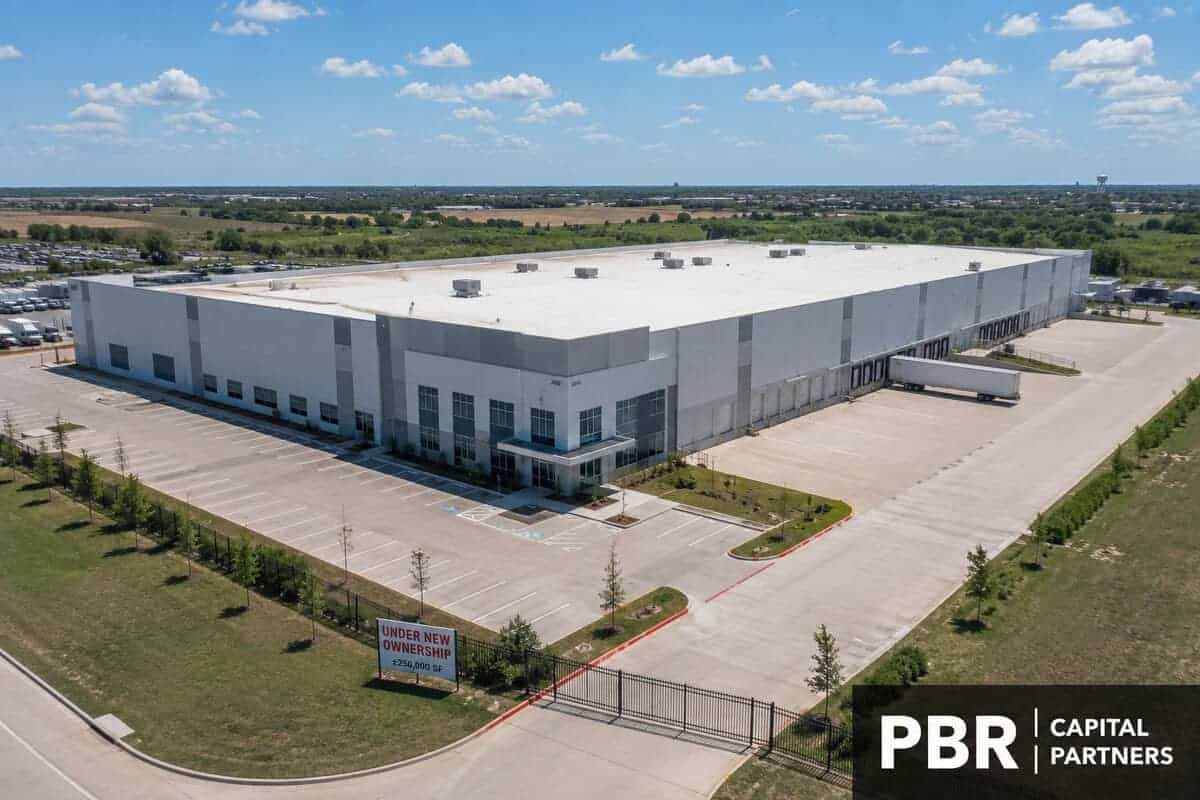
- Industrial and flex-industrial repositioning in the DFW Metroplex, driven by e-commerce and supply chain demand.
- Office repositioning projects in submarkets like Uptown Dallas, the Houston Energy Corridor, and Downtown Austin, where adaptive reuse and amenity upgrades are attracting new tenants.
- Retail strip and mixed-use redevelopment in growing suburban corridors throughout Tarrant County, Collin County, Denton County, and the Greater Houston area.
- Ground-up construction bridge financing in high-growth secondary markets including Fort Worth, Frisco, McKinney, and The Woodlands.
PBR Capital Partners: Direct Bridge Lending in Texas and Nationwide
PBR Capital Partners is headquartered in Arlington, Texas — centrally located within the DFW Metroplex — and operates as a direct capital provider for commercial real estate bridge loans. With direct access to the largest CRE market in Texas and established relationships across the state’s secondary and tertiary markets, PBR Capital Partners is positioned to move faster than lenders without local market knowledge and presence.
Investors in Texas benefit from PBR’s local market familiarity: understanding submarket-level vacancy rates, realistic renovation timelines for Texas construction environments, and the leasing conditions that inform exit strategy underwriting for DFW, Houston, Austin, and San Antonio assets.
Bridge Loans vs. Other Short-Term CRE Financing Options
Three instruments are most commonly compared to CRE bridge loans. Understanding where each fits prevents costly mismatches between financing tool and deal type.
| Factor | Bridge Loan | Hard Money Loan | Mezzanine Financing |
|---|---|---|---|
| Rate range | 8%–12.5% | 10%–15%+ | 12%–18% (+ equity) |
| Typical LTV | 65%–80% | 50%–70% | Fills gap above 70% LTV |
| Lien position | First / senior | First / senior | Subordinate |
| Credit profile required | 620–700+ | Any (asset-based) | Strong required |
| Best use case | Value-add, acquisition bridge, portfolio transition | Distressed asset, credit-challenged borrower | Large deals needing gap financing above senior debt |
Bridge loans occupy the middle ground: more institutional and structured than hard money, more straightforward than mezzanine. For most mid-market CRE transactions, a well-priced bridge loan from a direct lender is the most efficient financing tool available.
Common Mistakes CRE Investors Make with Bridge Financing
Underestimating the Renovation Timeline
Texas construction timelines — like those across the Sun Belt — have been affected by permitting backlogs, subcontractor labor constraints, and material lead times. A renovation projected at 9 months commonly takes 12–14 months. If your bridge loan matures before the property is stabilized, you face costly extensions, potential default risk, or a forced sale at a disadvantageous moment. Build a minimum 60-day buffer into every renovation timeline.
Vague or Optimistic Exit Assumptions
Stating “we plan to refinance” without specifying the lender type, their underwriting requirements, and a realistic occupancy timeline does not constitute an exit strategy — for the lender or for you. Know exactly what DSCR, occupancy, and net operating income your permanent lender requires, and work backward to build a credible path there within the bridge term.
Ignoring the Total Cost of Capital
A 10% bridge loan with a 2% origination fee, $5,000 in processing costs, and a 6-month extension at 0.75% costs materially more than the headline rate suggests. Model the full-period cost against your projected return on cost to confirm the deal still pencils after financing expenses.
Failing to Stress-Test Market Assumptions
Lease-up projections built on peak-market absorption rates can fail when vacancy trends shift or competing inventory enters the submarket. Run your exit assumptions against a downside scenario — 15%–20% longer lease-up and 5%–10% lower net effective rents — and confirm your bridge loan term still gives you enough runway.
How PBR Capital Partners Structures CRE Bridge Loans
PBR Capital Partners is a direct capital provider for commercial real estate bridge loans, headquartered in Arlington, Texas. We work with investors across the country on acquisitions, renovation projects, portfolio transitions, and lease-up bridge scenarios.
Direct Lending — No Broker Chain
As a direct lender, PBR Capital Partners provides capital without intermediaries. That means faster credit decisions, direct access to the people underwriting your deal, and a closing process that does not depend on third-party approvals. In competitive markets where the gap between first call and funded deal can determine whether you win or lose a bid, eliminating unnecessary steps in the lending chain matters.
Loan Parameters
- Loan-to-value: Up to 70%–80% of current or after-repair value, depending on asset type and exit strategy.
- Terms: 12–24 months, with extension options available for qualifying projects.
- Structure: Interest-only with optional interest reserves; draw schedules available for renovation and construction bridge loans.
- Closing timeline: Typically 10–21 business days from completed application package.
Geographic Reach and Texas Market Expertise
PBR Capital Partners serves commercial real estate investors nationwide, with particular depth in Texas markets including Dallas-Fort Worth, Houston, Austin, and San Antonio. Our team’s understanding of local market conditions — submarket occupancy trends, permitting timelines, contractor markets, and leasing dynamics — informs the underwriting of exit strategies for Texas assets in ways that out-of-state lenders often miss.
If you are evaluating bridge financing for a commercial real estate project in Texas or anywhere in the country, contact PBR Capital Partners to discuss your deal and timeline.
Frequently Asked Questions
How quickly can a CRE bridge loan close?
Most bridge loans from direct lenders close in 10–21 business days from a completed application package. Simple acquisitions with strong documentation occasionally close in 7 business days. The primary variables are documentation completeness, appraisal turnaround time, and title/legal complexity. Conventional commercial mortgages typically require 60–90 days for the same process.
What credit score do I need for a commercial bridge loan?
Most bridge lenders use a minimum credit score of 620–680 as a baseline, but credit is only one factor in the underwriting decision. Lenders give substantially more weight to the property’s value, the strength of the business plan, and the credibility of the exit strategy. A strong deal with a lower credit score will often receive approval where a weak deal with a higher score will not.
What is the typical LTV for CRE bridge financing?
Standard LTV for bridge loans ranges from 65% to 80% of current appraised value. For renovation and value-add projects, some lenders will lend against the after-repair value (ARV) — commonly up to 70%–75% of ARV — allowing a higher loan amount relative to the acquisition price when a well-supported renovation budget is in place.
Can bridge loans be used for Texas multifamily properties?
Yes. Multifamily is one of the most common asset types for CRE bridge loans, particularly in Texas markets where workforce housing value-add acquisitions are frequent. A typical scenario involves acquiring a 1970s–1990s vintage apartment complex at below-stabilized performance, funding renovations through a bridge draw schedule, and refinancing into agency financing (Fannie Mae, Freddie Mac) or a CMBS loan once occupancy reaches 90%+.
What happens if the property is not stabilized before the bridge loan matures?
Most bridge lenders offer extension options — typically at 0.5%–1.0% of the outstanding loan balance — for borrowers whose projects are progressing but not yet ready for permanent financing. The extension is not automatic; it requires the project to meet milestones and the lender to agree to the extension terms. This is why negotiating extension options at the time of origination, and building timeline contingency into your business plan, are essential practices.
Do bridge loans require personal guarantees?
Many bridge lenders require a personal guarantee, especially for loan amounts under $5M or for borrowers with limited CRE track records. Non-recourse bridge loans are available — typically for larger transactions with strong asset backing and experienced sponsorship — where the lender’s recourse is limited to the property itself. The guarantee structure should be negotiated as part of the term sheet, not discovered in the closing documents.
How does bridge lending differ for ground-up construction vs. renovation?
Ground-up construction bridge loans involve higher risk and complexity than renovation bridge loans because there is no existing cash flow or stabilized asset supporting the loan. Lenders focus heavily on the sponsor’s track record, the construction contract structure, and market absorption projections. Renovation bridge loans, by contrast, are underwritten against an existing asset with a defined renovation scope, making the path to stabilization more predictable and the credit decision more straightforward.
How do I get started with a bridge loan application?
The fastest way to begin is to have your deal summary ready: property address and description, purchase price or current value, renovation scope and budget (if applicable), projected value post-renovation, and your planned exit. A direct lender like PBR Capital Partners can provide a preliminary term sheet quickly — often within 24–48 hours of receiving a deal summary — so you can evaluate the financing before committing to the full documentation process.
Further Information: